Posts

Day 3

Image
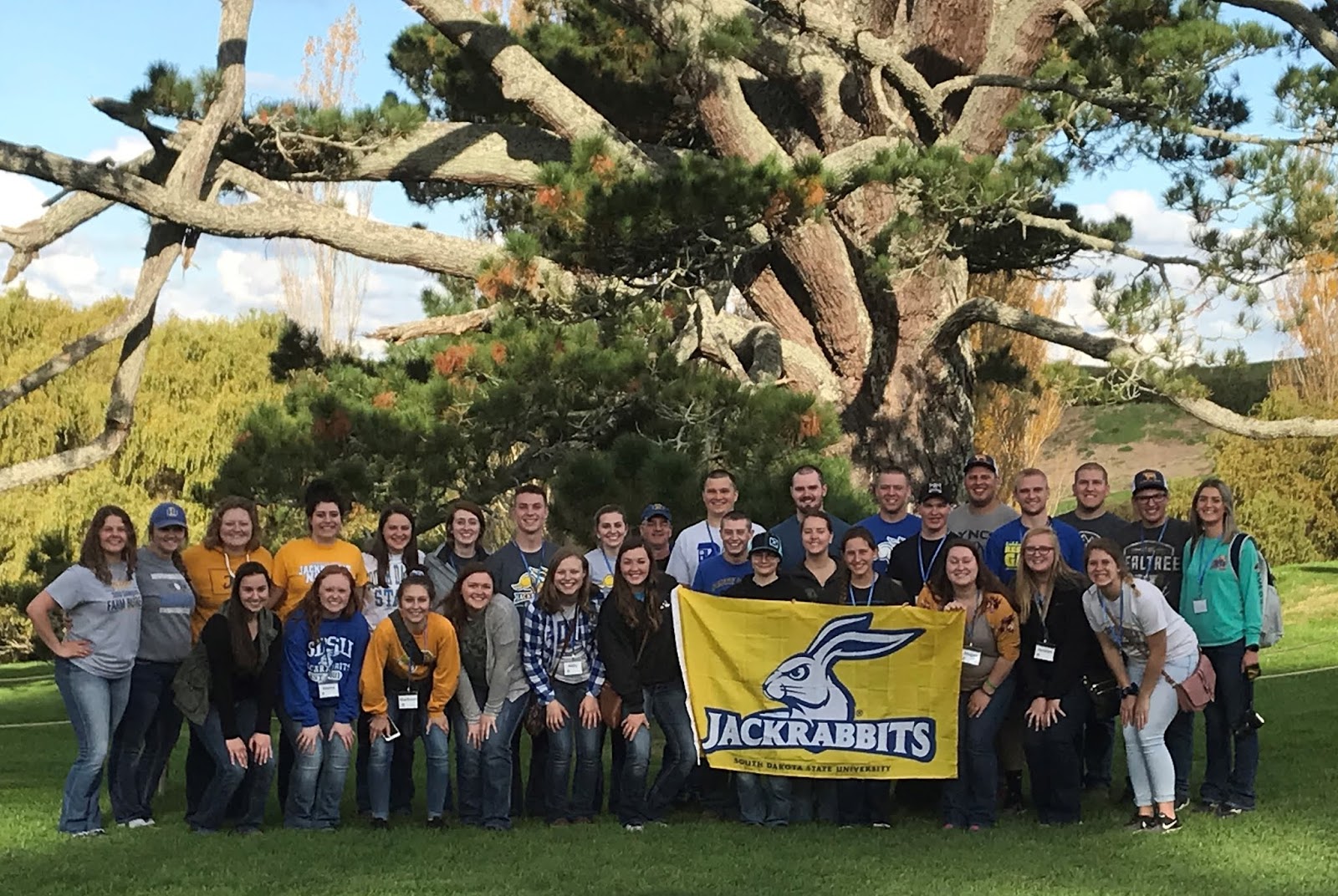
Group picture in from of the Party Tree at Hobbiton Connie and her 21st Birthday   We started out this morning heading to a dairy farm owned by Grant Wills by Matamata on the North Island. They winter 700 cows and 180 replacement heifers on 244 hectares. Their diets include mainly grass, but they also feed a mixed ration consisting of corn silage, tapioca, palm kernel extract, bread byproduct, dry distiller grain solubles, grass silage, and whole kiwi fruit as a high energy source. The cattle love the sweet taste of the kiwi and will usually sort that out first. Their pastures are mainly ryegrass and white clover. In New Zealand, they have an input scale of 1-5, 1 being the lowest and 5 being the highest amount of input. Grant’s farm is considered a 4 or 5 because they feed so many ingredients. Whole Kiwi feedstuff Palm Kernel Extract They supply their milk to Fonterra, which is a dairy manufacturing cooperative, of which he owns shares in equal to the am...

Day 2

Image
Our morning began with a beautiful Auckland sunrise followed by a traditional New Zealand breakfast at the hotel. We then loaded the bus and headed for Balle Brothers vegetable growers located in Pukekohe, where more than 44 inches of rain falls each year, which enhances yield and profitability of vegetable crops. They are the biggest vegetable growers in New Zealand. Balle Brothers produce mainly onions, potatoes, and carrots as well as cauliflower, pumpkin, and sweet potatoes. They harvest 10 months out of the year and processing can operate up to 22 hours a day at peak times. Balle Brothers’ level of production is a good example of how New Zealand, a country with 4.7 million people, can produce enough food to feed roughly twenty million people, with 60% of their produce exported fresh to Asia, Indonesia, and Europe. Balle Bros is operated by 7 brothers, who also operate a dairy farm in Chile. They strive for a maximum of 10% waste off all fresh produce. The waste products are th...